
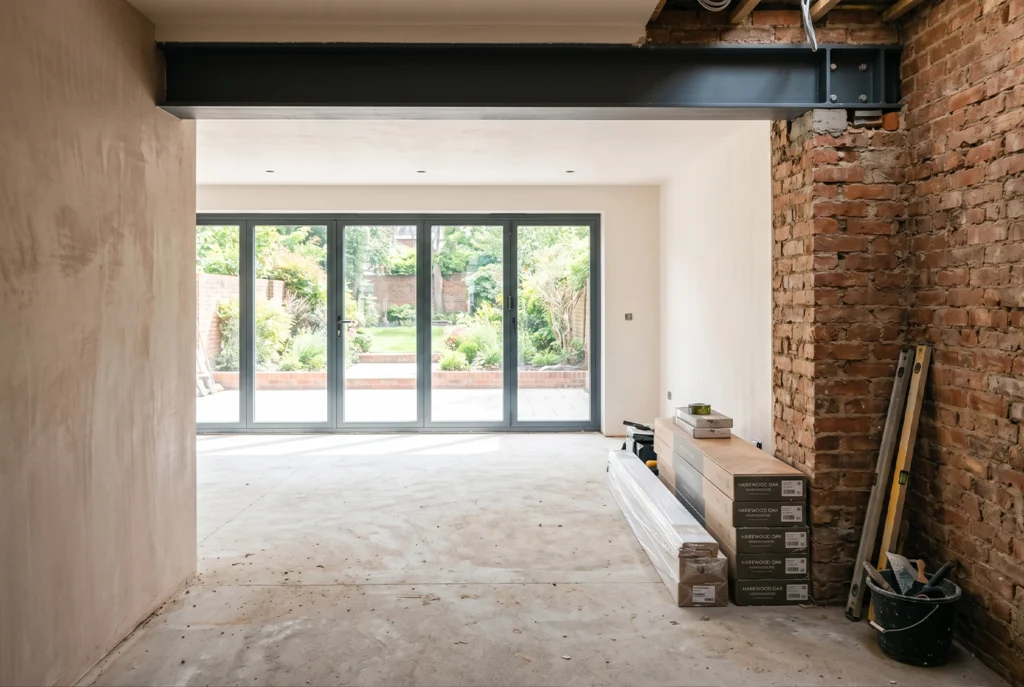
Will a renovation disrupt your everyday life?
Whether you can remain at home during construction depends on the type of work, the rooms affected and the facilities that will remain usable. Some projects can be completed while homeowners continue living in the property, while others may make parts of the house difficult or unsafe to access.
A kitchen renovation, for example, may temporarily affect cooking and washing facilities. A larger structural project could involve more extensive noise, dust, restricted access or temporary interruptions to essential services.
Before work begins, discuss the practical impact with your contractor. Understanding the disruption in advance can help you decide whether to remain at home, arrange alternative accommodation or plan a mixture of both.
Think about how the work will affect an ordinary day, not only the construction itself. You may need somewhere to prepare meals, take calls, work, study or relax while the affected rooms are unavailable. Deliveries and contractors arriving at the property can also change your usual routine, particularly where access is limited.
The answer may change at different stages. You might be able to stay during preparation but choose to move out briefly when essential services are disconnected or major structural work is taking place. Ask for the likely sequence so you can plan around the stages expected to have the greatest effect.
What should you check before deciding?
Consider these four points:
- Essential facilities: Will you have access to a toilet, washing facilities, drinking water, and a way to prepare meals?
- Safe access: Can you move around the property without entering active work areas?
- Dust and noise: Which rooms will be affected, and what measures will be used to control disruption?
- Household needs: Are children, older residents, pets, or anyone working from home likely to be affected?
Consider whether heating, hot water, electricity or the water supply may be interrupted during particular tasks. Ask which services could be affected, how long an interruption might last and whether notice will be given. Do not assume every facility will remain available throughout the project.
If you have pets, discuss how they will be kept away from work areas and whether noise or unfamiliar visitors could affect them. Children should also be kept away from tools, materials and active work areas. If you work from home, ask about noisy periods so important calls can be planned around the programme where possible.
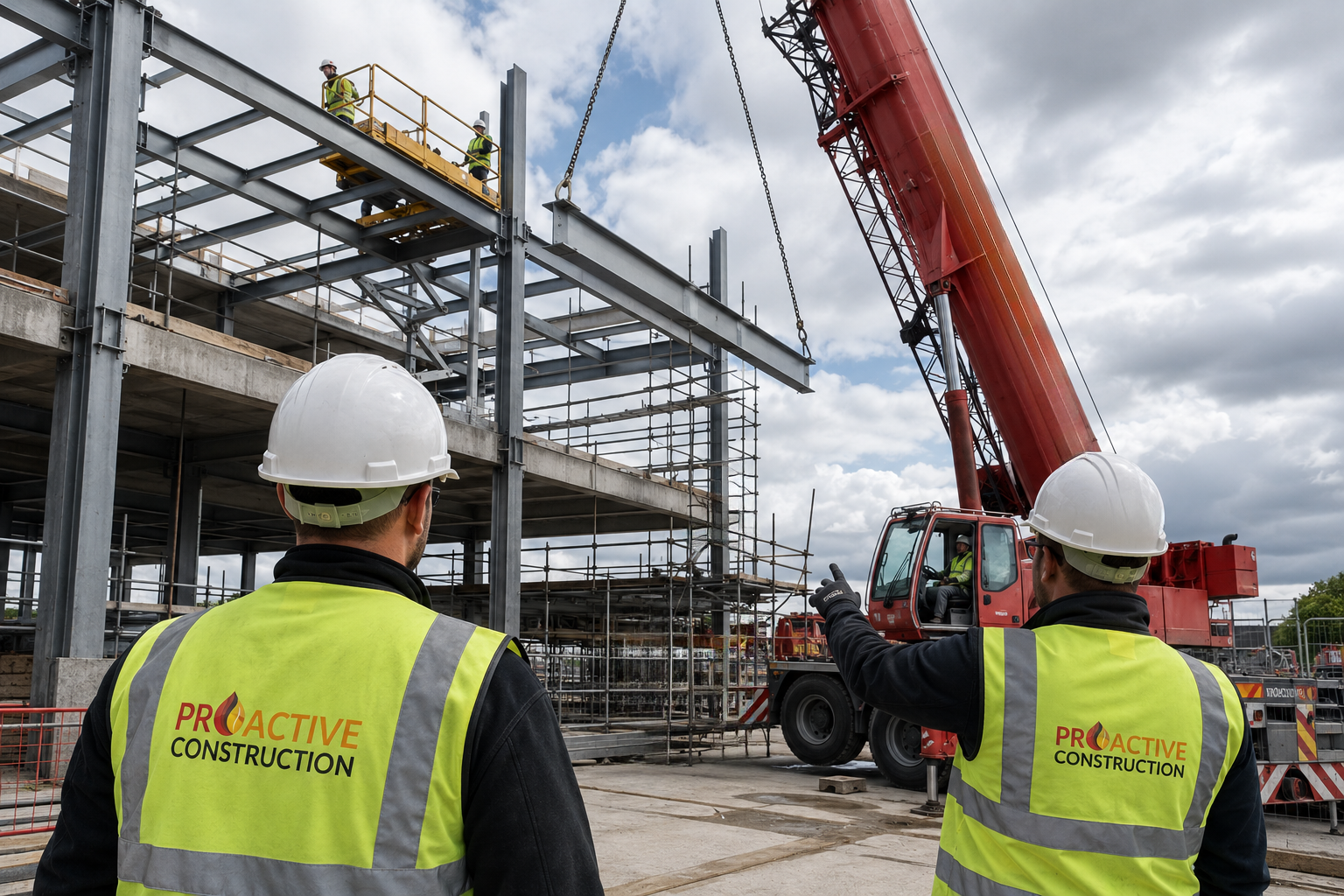
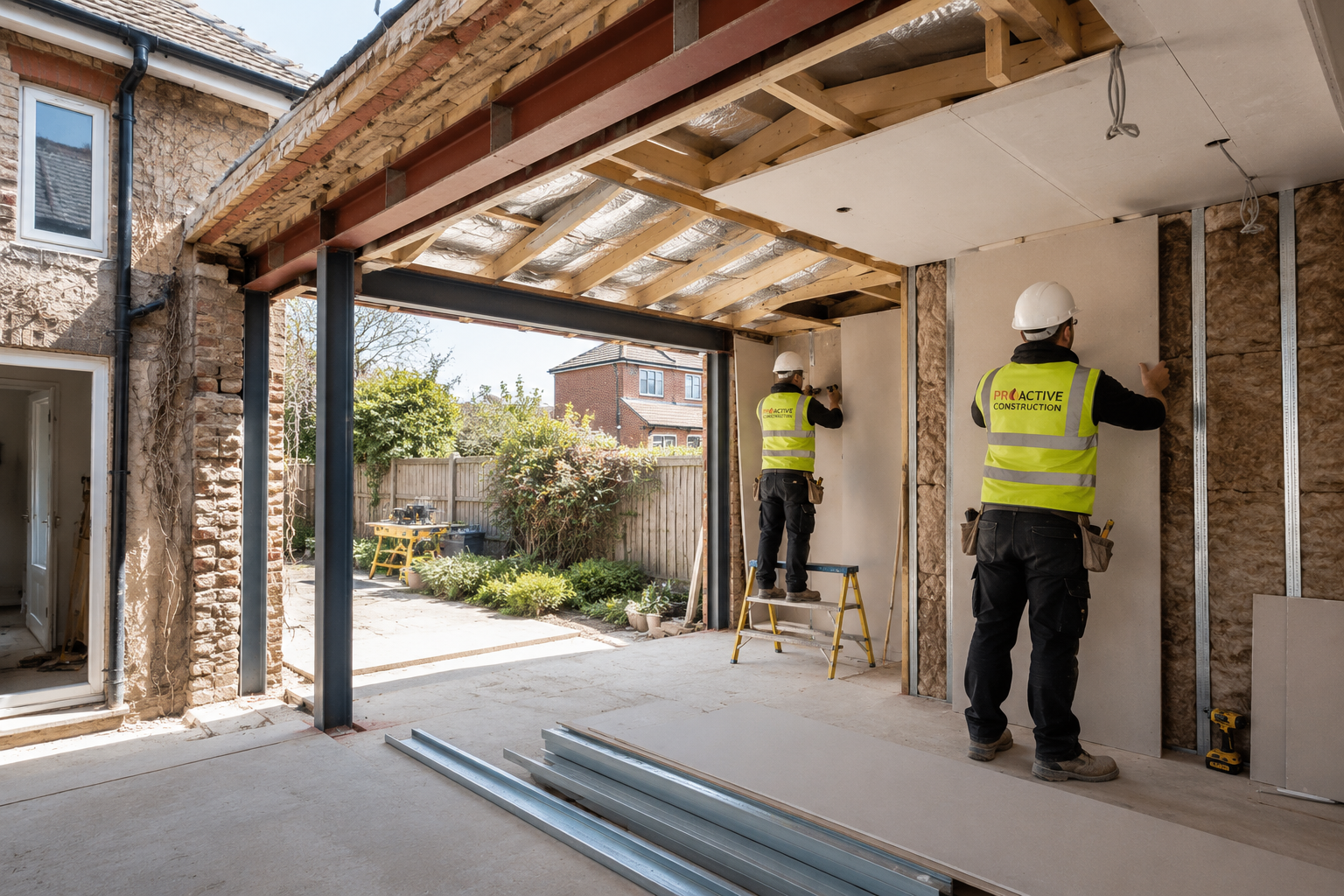
How to prepare your home for construction
Ask for a disruption plan: Establish which rooms and services may be unavailable and when.
Create a usable living area: Where practical, keep essential belongings and everyday facilities away from the work zone.
Agree on site boundaries: Confirm how work areas will be separated and how safe access will be maintained.
Prepare an alternative plan: Decide where you could stay if the work becomes too disruptive or essential facilities cannot be used safely.
Before the start date, remove valuables, fragile items, and belongings that could be affected by dust or vibration from the work area. If furniture needs to be moved, agree on where it can be stored without blocking access. Keep important documents and everyday essentials somewhere easy to reach.
When moving out may be the sensible option?
If construction affects the only bathroom, kitchen or safe entrance, staying at home may be impractical. Significant structural work or major changes to services may also require temporary relocation.
Ask your contractor to explain the expected disruption, but recognise that unforeseen conditions can change the original arrangements.
Key takeaway
Decide whether to stay at home based on safety, access and essential facilities, not just the expected length of the project.
Common mistakes to avoid
- Assuming you can remain at home without discussing the work sequence.
- Storing personal belongings inside active construction areas.
- Overlooking the effect of noise, dust and deliveries on everyday routines.
- Failing to plan for temporary loss of essential facilities.
Don’t enter restricted work areas or attempt to manage construction hazards yourself. Raise concerns with your contractor and follow the agreed site safety arrangements.
How Proactive Construction can help
Proactive Construction undertakes residential extensions and refurbishment projects, with project coordination and communication throughout the work. If you’re concerned about living arrangements during a renovation, discuss the likely disruption and site arrangements with the team before the project begins.
Explore Proactive Construction’s extensions, conversions and refurbishment services.